

The IRIS 2026 student conferences
showed what young people can do when they are trusted to investigate questions that matter
More than 300 students aged 11 to 18 presented their own scientific research at IRIS conferences in Manchester and Exeter this June, joined by around 100 teachers and guests.
Across the two conferences, students presented findings on health, climate, technology, space, public understanding of science and the future of flight. Their projects asked ambitious questions: how might naturally occurring hydrogen in Cornwall support the energy transition? Is manuka honey really worth the money? Could software help search for signs of particle physics’ supersymmetry more efficiently? What happens to microscopic organisms as temperatures rise?
Students were not simply repeating known answers. They showed how they had handled uncertainty, explained their methods and responded to questions from peers, teachers, researchers and industry professionals.
A research community, not just a showcase
Each conference was designed to give young people the experience of being part of a wider research community. Through poster sessions, keynote talks, Q&A discussions and student presentations, they shared their findings, learned from other students and saw their work taken seriously by scientists and researchers.
This matters. The most recent Public Attitudes to Science survey reported that a third of young people said school had put them off science. Yet in Manchester and Exeter, the enthusiasm from students told a different story. Given the chance to investigate real questions, students can see science as something they can test, challenge and shape themselves.
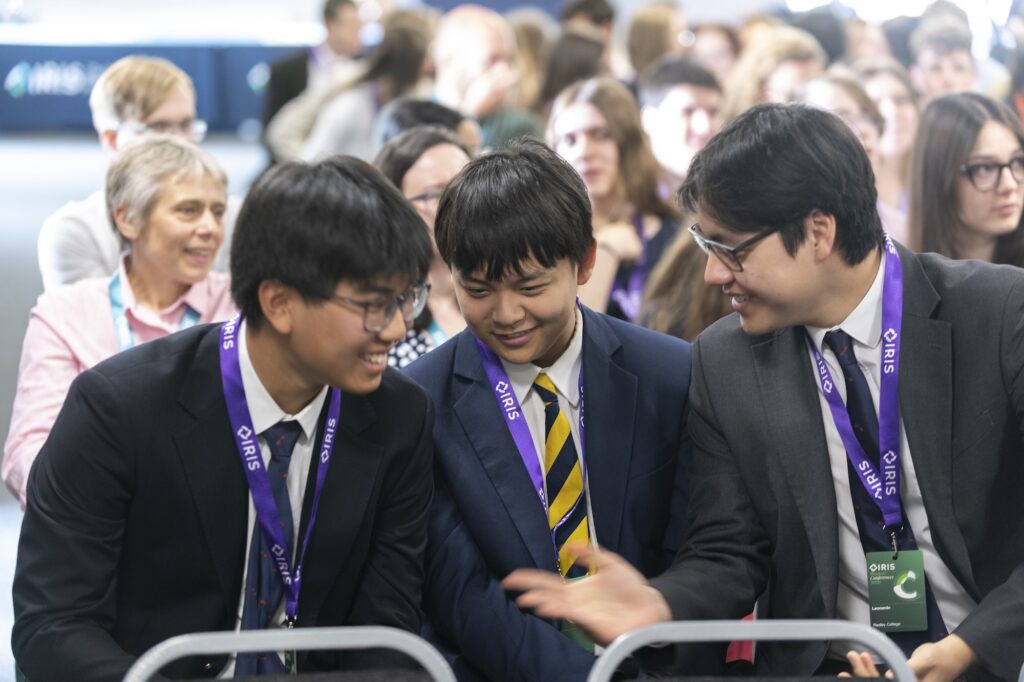 Discussing stage presentations
 Discussing research findings
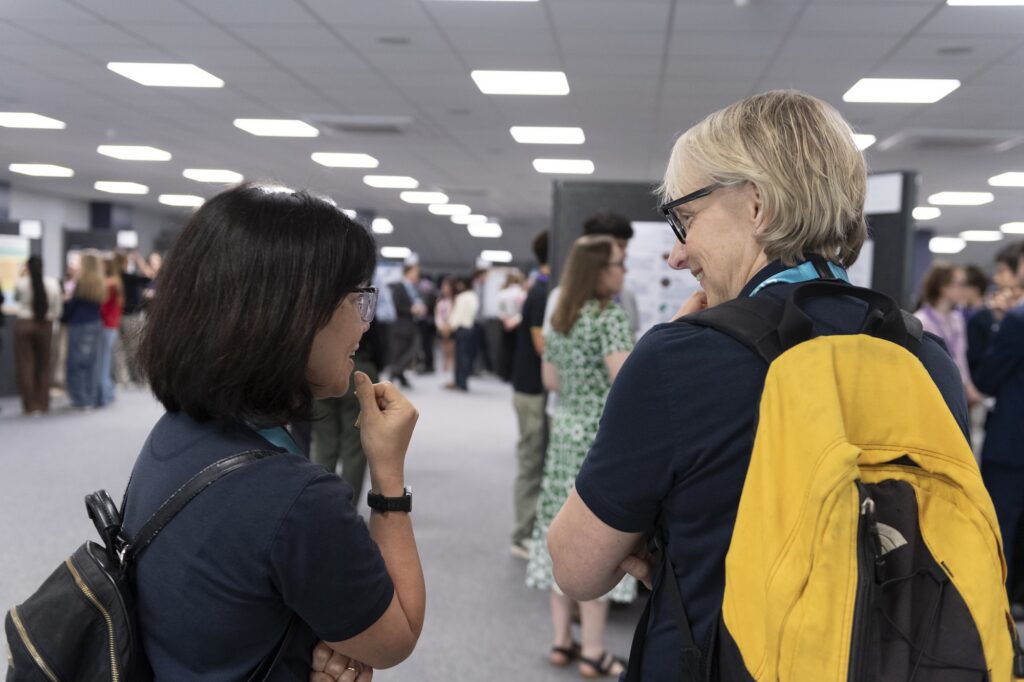 Teachers arrive at conference
 Asking questions
 Student research in action
In Manchester, students presented work that ranged from urban heat and health to future transport.
Lady Manners School presented research on the urban heat island effect, comparing temperature patterns in Tokyo and Chubu using satellite data. Their conclusion was clear and practical: urban areas remain warmer than rural ones throughout the year, and more vegetation could help protect quality of life as temperatures rise.
Students from St John Fisher Catholic Academy explored how hydrogen fuel storage could be integrated into commercial aircraft while maintaining efficient range and cost per passenger. They modelled 11 tank configurations and showed both the benefits and complications of hydrogen-powered aviation.
Dixons Sixth Form Academy presented original research into whether yeast could be used as a model to test whether antioxidants reduce the risk of reperfusion injury. Their work connected cellular biology to global health, NHS costs and clinical decision-making.
Later, students from The Lowry Academy gave a lightning talk on reducing carbon emissions linked to journeys to school. At 11 – 12 years old, they were among the youngest students at the conference.
In Exeter, Callington Community College explored how temperature affects nematode movement, linking microscopic organisms to nutrient cycling, decomposition and wider ecosystem health.
Hele’s School, working on our Cosmic Mining project, investigated possible causes of unexpectedly high flux density values.
Truro and Penwith College presented work on DNA origami structures and their potential medical applications, including in cancer research.
Other projects explored game theory and stereotypes, carbon dioxide removal and machine learning approaches to searching for supersymmetric evidence.
 Sharing research from the stage
 Questions for presenters
 Keynote speakers and panellists
Keynote speakers and panellists helped young people see where research can lead, while speaking honestly about uncertainty, setbacks and changing direction.
In Manchester, Hasiba Nawaz (Balmoral Tanks) spoke about working in a male-dominated field and wanting to be the role model she had not had. Dr Paul Brett (Adamo Foods) and Olivia Brittain (Kindeva Drug Delivery) reflected on the satisfaction of seeing research move beyond the lab or design stage and into real-world use.
Dr Elizabeth Polgreen, from the University of Edinburgh, introduced herself as a computer scientist who “doesn’t trust computers”. Her talk explored how logic can be used to prove software is correct and why this matters as AI changes how software is written. Her advice to aspiring programmers was simple: play with software, build something fun and keep learning the maths that helps you understand how systems work.
In Exeter, Momin Ashraf from the Satellite Applications Catapult described how AI has changed access to data and sped up parts of his work. He also showed students that STEM careers are rarely linear, sharing how his route moved through geography, satellite data, urban development and earth observation.
Dr Sam Richards spoke about the possibility of a human mission to Mars, while being honest about the practical difficulty of a journey that could take years. Professor Laura Nuttall shared the sound of two black holes colliding and invited students into a field where much is still unknown: “We have yet to unlock the rest of the gravitational wave spectrum. Come and help us figure out what it looks like.”
 Panellists at the Manchester conference
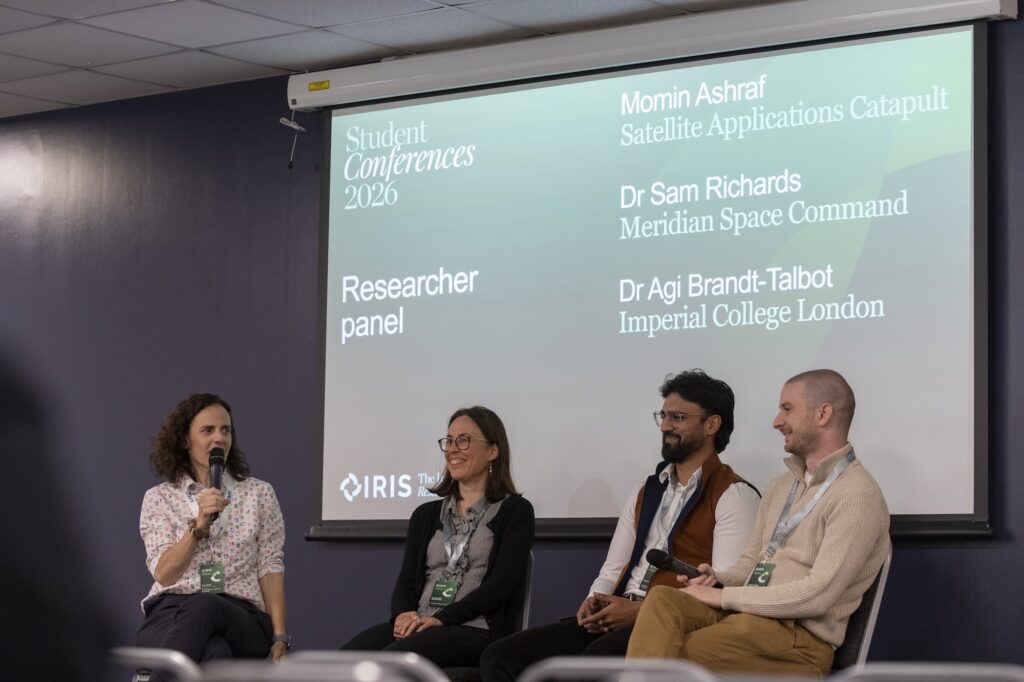 Panellists at the Exeter conference
Why this matters for schools and colleges
At IRIS, we believe authentic research should not be an optional extra for a small group of already confident students. With the right support, real research experiences can help more young people build independence, communication, resilience and a stronger sense of what science and innovation are for.
Many IRIS projects begin with a structured project and topic. The strongest moments often come when students take ownership: refining methods, interpreting unexpected results and deciding what to do next.
That is where culture change begins. When students do real research, they can begin to see themselves as contributors to the future of science, not just learners of its past.
Thank you
Thank you to every student, teacher, speaker, panellist and colleague who made the IRIS 2026 student conferences possible.
Unfortunately, due to the implications of the red weather alert for much of the UK, we had to cancel this year’s London conference. Thank you to everyone who prepared for the event; we hope to see you in the months and years to come.
With thanks to our keynote speakers and panellists: Momin Ashraf, Satellite Applications Catapult; Dr Agi Brandt-Talbot, Imperial College London; Dr Paul Brett, Adamo Foods; Olivia Brittain, Kindeva Drug Delivery; Hasiba Nawaz, Balmoral Tanks; Professor Laura Nuttall, University of Portsmouth; Dr Elizabeth Polgreen, The University of Edinburgh; Dr Sam Richards, Meridian Space Command.
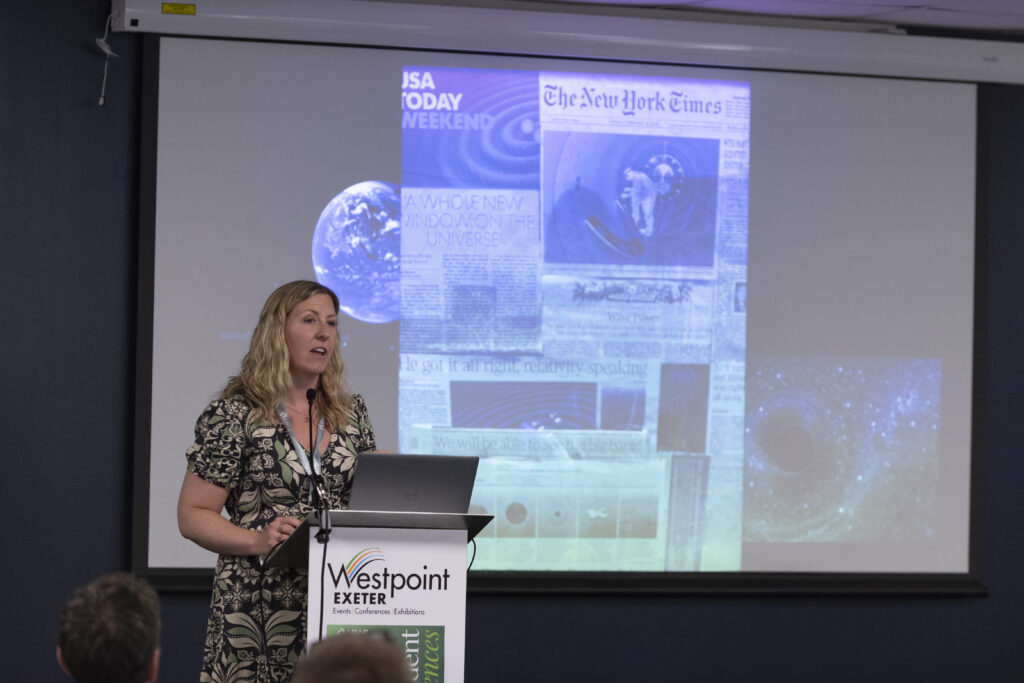 Professor Laura Nuttall, keynote speaker in Exeter
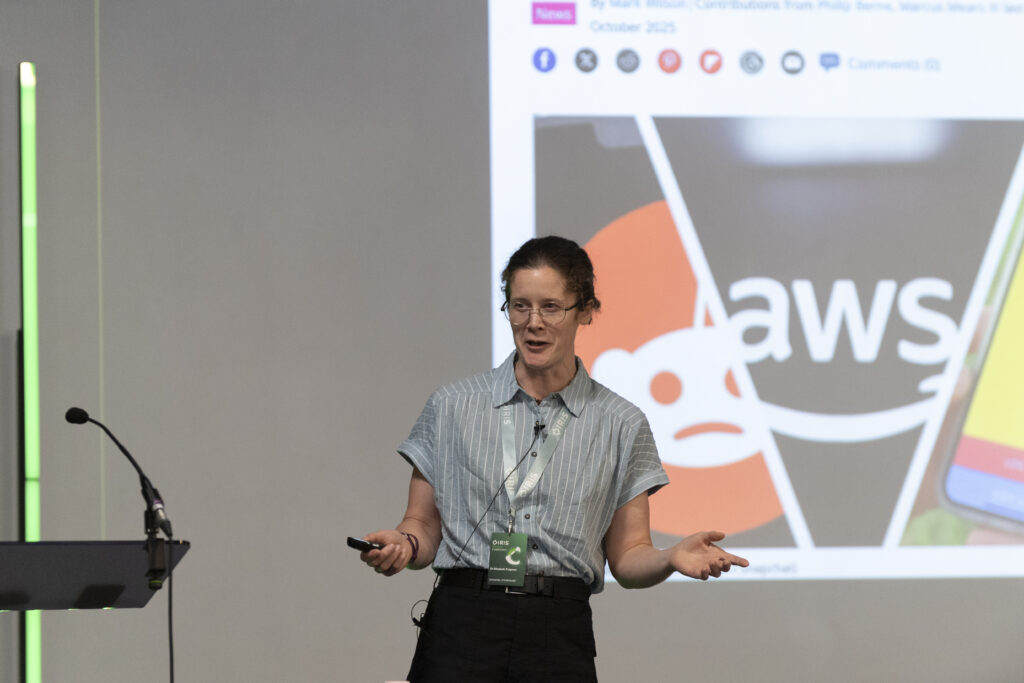 Dr Elizabeth Polgreen, keynote speaker in Manchester
  Discussing research with IRIS staff
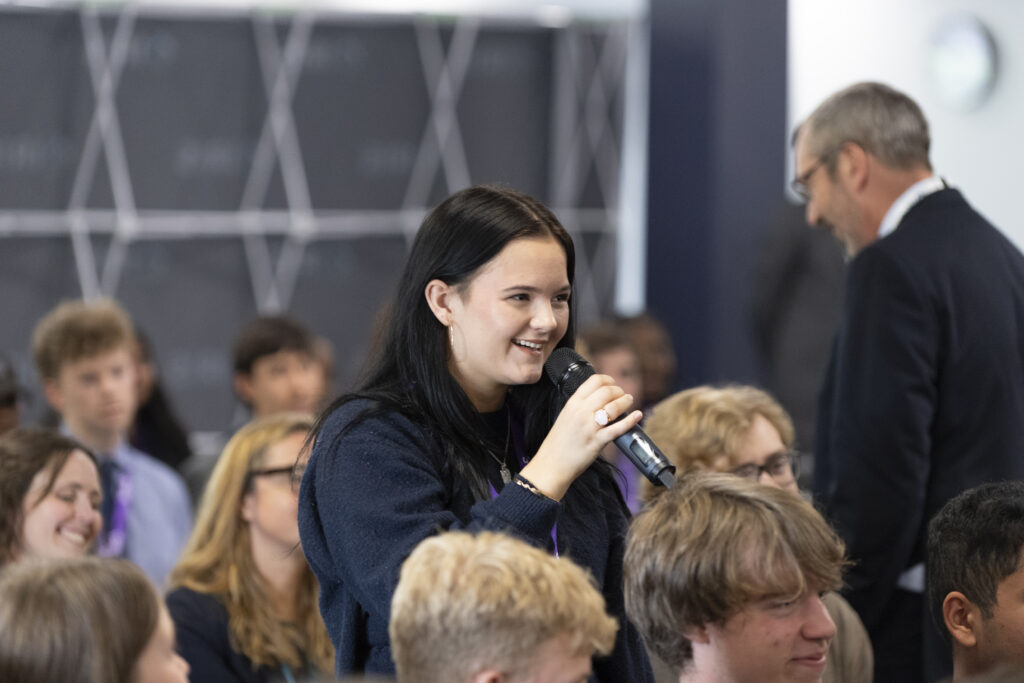 Questions from the floor
Find out more about our project topics
Schools can join an IRIS research project at any point in the year, but we recommend getting started in the first term so students have time to investigate their questions in greater depth.
Learn more about Getting Started with Research
Our new resources for teachers to inspire students to begin their research and innovation journey, regardless of starting point